Bitcoin Casinos in Canada 2026: How Crypto Gambling Sites Work, What Canadian Players Should Check Before Depositing, and Why Licensing, Fees and Payout Speed Matter More Than Bonuses
Bitcoin Casinos in Canada 2026: How Crypto Gambling Sites Work, What Canadian Players Should Check Before Depositing, and Why Licensing, Fees and Payout Speed Matter More Than Bonuses
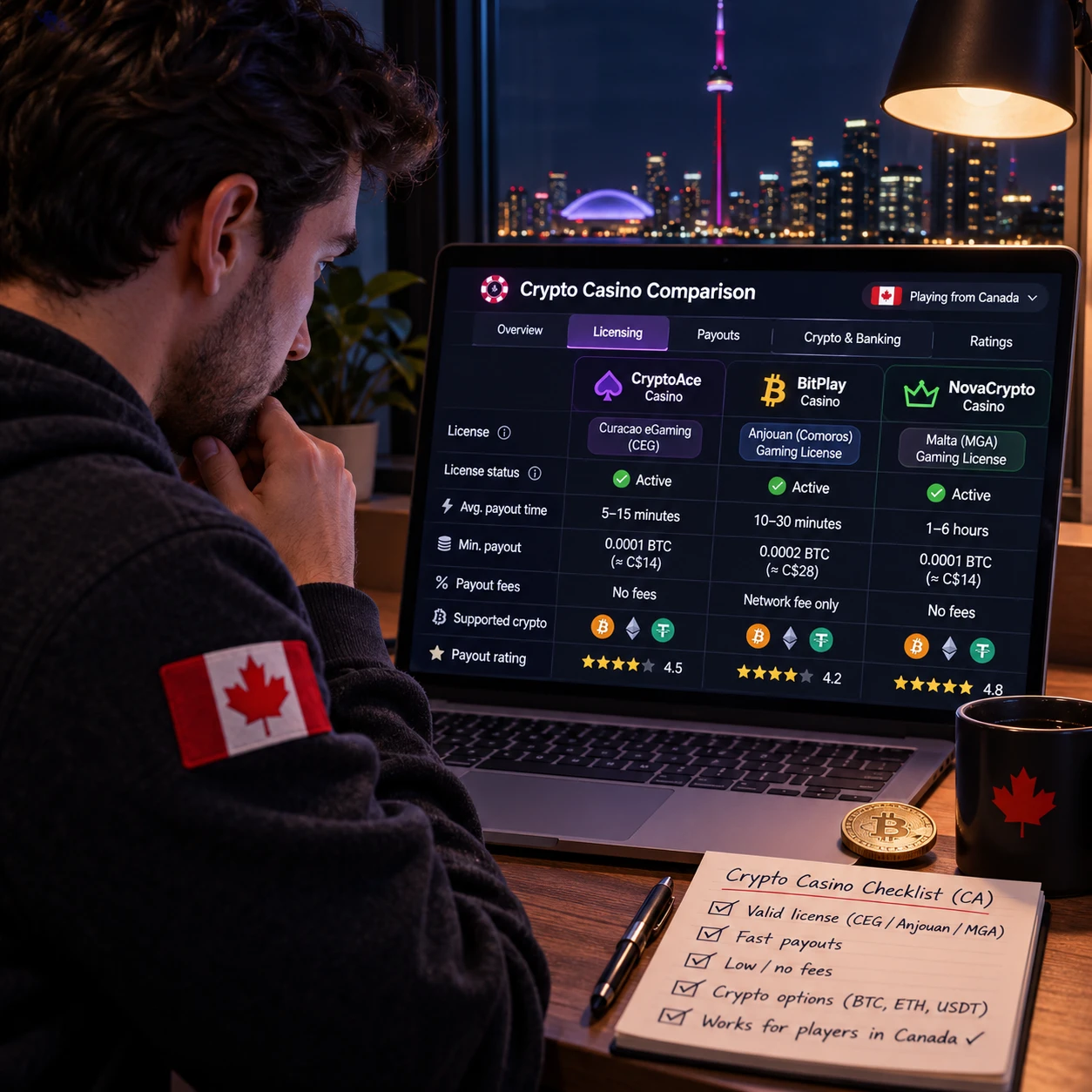
Paying a casino in bitcoin isn't exotic anymore — hasn't been for a while. In 2026 it sits right next to Interac at checkout for a lot of Canadian players, and a growing slice of the market barely glances at anything else. The payment method isn't the problem. It's what people check first. Most deposit decisions still get made from the top of the promotions page — the 300% match, the free spins, the 'instant payout' badge — instead of the terms page nobody opens. I'd flip that order. In Canada, licensing, fee structure and payout speed decide whether an operator is actually usable. Bonuses are the least reliable signal on the whole site. By the end of this you'll have a short list to run before your next deposit.
How Bitcoin Casinos Actually Work in 2026
Strip off the branding and a crypto casino is a database with a wallet bolted to it. The games sit on the operator's servers — either a provably-fair RNG or a third-party studio library, the Pragmatic, Push, Hacksaw tier. You deposit, the casino hands you a wallet address or a payment request tied to your account, your coin hits the chain, the network confirms it, and the casino's ledger credits your balance. Somewhere in that chain of events it usually converts into CAD, if your account is denominated that way. Everything you see on screen afterwards is the operator's own accounting.
And that's where plenty of players get the wrong idea. The blockchain settles the deposit and the withdrawal. It does not make the casino trustless. The games are still closed-source — or at least operator-run — the payout decisions are still made by a company, and somebody still sets the house edge. A provably-fair hash proves the shuffle wasn't tampered with. It doesn't prove the casino pays you on Tuesday. Accountability is a legal and corporate question, not a technical one, which is why the next section matters more than any wallet feature.
What Happens Between Your Deposit and Your First Spin
The honest sequence, for a Canadian player: you pick a coin — BTC, ETH, USDT, LTC are the usual four — and the site hands you an address. You send from an exchange or a self-custody wallet. On-chain BTC usually confirms in ten to thirty minutes depending on the mempool. ETH and TRC-20 USDT tend to be faster, and Lightning, where it's offered, is close to instant. Network fees are yours, not the casino's, and they swing wildly with congestion — I've watched people pay more in fees than their whole minimum deposit during a bad week.
Then there's the part nobody mentions. Conversion. A CAD-denominated account gets converted at the casino's own rate, spread included, and a 1–2% spread on every deposit and withdrawal quietly costs more than most welcome bonuses are worth. Minimum deposit thresholds run from about $10 to $50 equivalent, and a few sites set higher floors specifically for crypto.
Custody, Wallets and What 'Your Balance' Really Means
Deposit, and your coins aren't yours anymore. They sit in the operator's wallet while your balance becomes an unsecured claim on that company — same shape as a bank balance, except there's no deposit insurance and, in most offshore cases, no regulator standing behind it. Self-custody covers what's in your own wallet. Not what's on the casino floor. Keep that line sharp: gamble from a float, not from your holdings.
Which is also why Lightning and stablecoin rails keep turning up next to on-chain BTC. Lightning solves speed and fee for small amounts. USDT and USDC solve volatility mid-session. Both are convenience features. Neither changes who holds the money.
Licensing — The First Thing to Verify, Not the Last
Canada doesn't have one federal regulator for online gambling. The provinces run their own regimes — Ontario's iGO-regulated market is the most developed, with registered operators and legal advertising — and the rest range from monopolies to grey areas. Plenty of offshore operators serve Canadians under licences from Curaçao, Malta, Kahnawà:ke or Anjouan. None of that is automatically disqualifying. But you want to know which one you're dealing with before money leaves your wallet.
So what does a licence actually buy you? Four things, and they're all practical. A dispute escalation route for when the casino stonewalls you. Mandatory KYC and AML checks, which sound annoying until you remember they're what stops a site from being a laundering front. Segregation of player funds, which decides whether your balance survives the operator going insolvent. And advertising standards — which is why licensed sites tend to be less lurid about their claims.
- Find the licence number. Usually in the footer, sometimes only on an 'About' page.
- Look that number up in the regulator's public register. If you can't find a register, that tells you something.
- Check the corporate entity name against the licence holder. Mismatches are common and worth a second look.
- In Ontario, check whether the site is registered with iGO. An operator advertising to Ontarians without registration is already breaking the rules.
Reading the Fine Print Around Canada and Provincial Rules
Geo-restrictions are where licensing turns concrete. Some offshore sites block Ontario IPs and take the rest of the country. Others do the reverse. Some take everyone and hope nobody asks. Provincial blocklists and payment-processor rules shape what actually works, too — a site can happily take your deposit and then refuse a withdrawal routed through a Canadian bank, which is a miserable surprise to hit at cashout. And if a site advertises hard to Canadians while its licence doesn't cover Canadian players, read that as a preview of how it'll handle your complaint.
Fees and Payout Speed — Where the Real Cost Hides
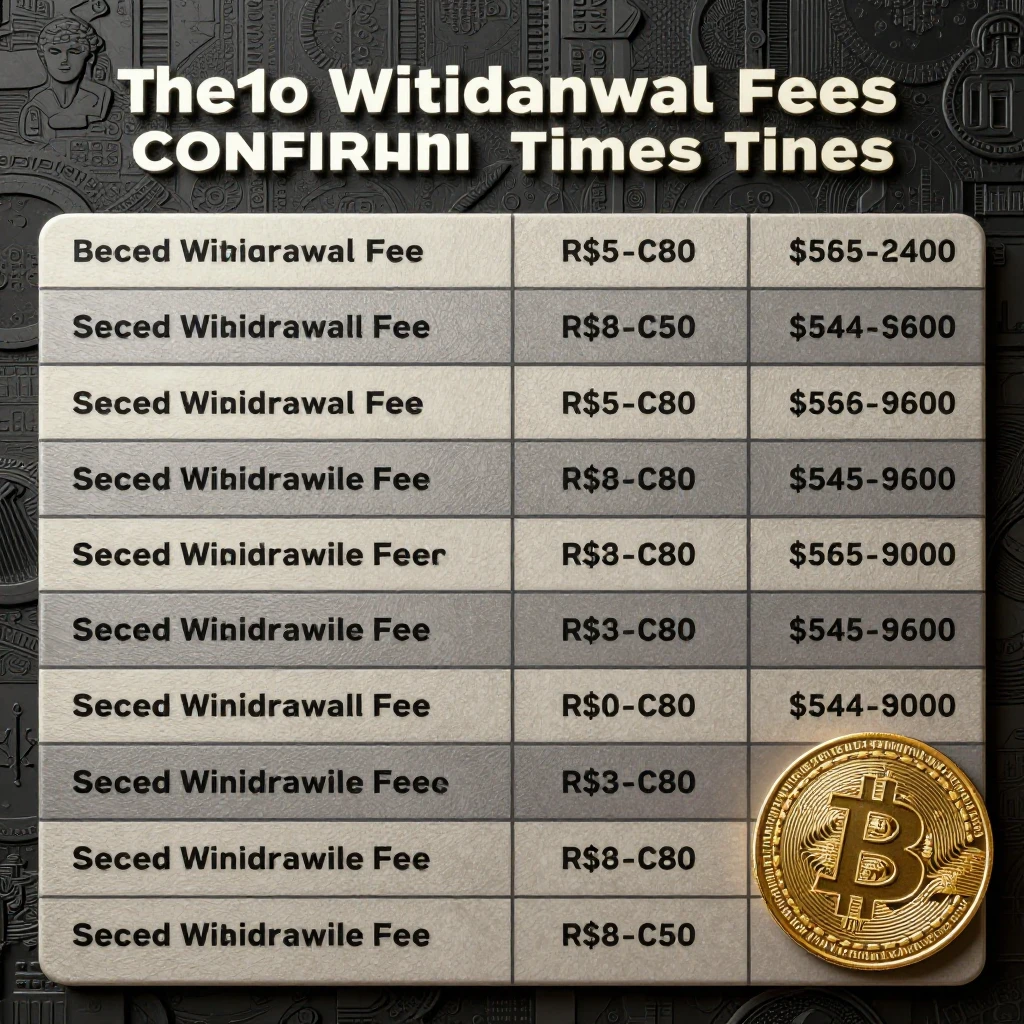
Costs stack in three layers and players usually only see the first. Layer one: the network fee you pay the miners — transparent, variable, not the casino's money. Layer two: the operator's own withdrawal fee and minimum, stated in the terms and routinely ignored. Layer three: the conversion spread on crypto-to-CAD, often the largest of the three and the hardest to spot, because it's baked into the rate instead of listed as a line item.
Payout speed deserves the same honesty. 'Instant withdrawals' almost always means instant approval. The bottlenecks are the casino's review queue and the blockchain's confirmation requirement. Plenty of sites wait for three to six confirmations before releasing funds — thirty to sixty minutes on BTC in normal conditions, longer when the mempool is busy. And the single biggest delay on a first withdrawal isn't block time at all. It's KYC. Win before you've verified and you're looking at a day or more of document review, sometimes timed suspiciously well against your request.
A Simple Four-Question Test Before You Deposit
- Is the withdrawal fee stated in the terms — and is it flat or a percentage?
- Is there a maximum cashout per transaction, and does it apply to bonus winnings?
- How many confirmations does the site require before releasing a withdrawal?
- Does the first withdrawal trigger mandatory verification, and how long does that take?
If a site can't answer all four cleanly, that's your answer. For a properly structured comparison of Canadian-facing bitcoin casinos that lays out licensing, fee schedules and payout speeds side by side, that's the page I'd send a friend to — it saves you opening twenty terms pages yourself.
Why Bonuses Should Be Your Last Consideration
A welcome offer is a marketing expense, and it's priced to be profitable. The 300% match headline hides wagering requirements, game weighting (slots often count 100%, table games far less, live dealer sometimes zero), maximum bet caps while a bonus is active, and expiry windows counted in days. Bonus funds are almost always locked — you can't withdraw them, only winnings generated from them, and only after the rollover clears.
Run the arithmetic once and the ranking sorts itself. A $1,000 offer at 40x wagering needs $40,000 of play before you can touch a cent. At a 4% house edge that's roughly $1,600 in expected losses. A modest $200 offer at 20x needs $4,000 — and is worth far more in practice. A fast, cheap withdrawal path beats both. Read the terms page before the promotions page. Five-minute habit, and it changes which sites you end up using.
Red Flags in the Promotional Terms
Sticky bonuses keep the bonus amount tied to your balance, so your own money gets eaten by the rollover. Non-sticky bonuses release the bonus when you withdraw — much better, and rarer. Then watch for cashout caps on bonus play, 'max bet' clauses that void winnings if you stake above a threshold while a bonus is active, and wagering contribution tables that exclude the exact games the bonus was advertised on. Any one of those three and the offer is worth less than the banner suggests.
What Canadian Players Should Check Before Depositing
Here's the checklist I'd actually run, in order:
- Licence and regulator lookup — number, register, entity name.
- Fee schedule on the terms page — deposit, withdrawal, conversion spread, inactivity fees.
- Withdrawal limits and confirmation policy — per transaction, per day, confirmations required.
- KYC requirements — what documents, how long, and whether verification can be done before your first withdrawal.
- Responsible-gambling tools — deposit limits, cool-off periods, self-exclusion. If these are buried or absent, walk.
- Provable fairness or third-party RTP certification — iTech Labs, eCOGRA, GLI, or an auditable provably-fair system.
- Support responsiveness — send a real question before you deposit and time the reply.
On tax: crypto gambling winnings in Canada generally aren't treated like lottery winnings, and the CRA's position depends on whether you're a casual player or running something closer to a business. Coin appreciation between deposit and withdrawal can raise capital-gains questions as well. Accountant territory, not casino-FAQ territory — ask a professional instead of trusting a support chat.
Security Basics for the Wallet Side
Keep a separate gambling wallet funded with what you're prepared to lose, and never connect your long-term holdings to a casino. Type the domain rather than clicking ads, and verify app sources before installing anything. Turn on 2FA wherever it's offered, and don't reuse deposit addresses across accounts — it's a small privacy leak that gets bigger if a site is breached.
Frequently Asked Questions
Is crypto gambling legal in Canada?
Online gambling is legal but provincially regulated, and Ontario runs a licensed iGaming market. Offshore sites serving other provinces sit in a grey zone — legal for the player to use, but without Canadian consumer protection.
Do I pay tax on casino winnings paid in bitcoin?
Casual winnings generally aren't taxed as lottery-style income, but professional or business-income treatment can apply, and coin appreciation may be reportable. Get advice for your own situation.
How long do BTC withdrawals take?
Approval is often fast; settlement depends on confirmations. Three to six blocks means roughly thirty to sixty minutes, plus any KYC review on a first cashout.
Are offshore-licensed casinos safe?
They can be, but your recourse stops at the offshore regulator. Which makes the licence and the operator's track record the main things to check.
Can I use a VPN to access a blocked site?
You can, but you shouldn't. It usually breaches the terms, hands the operator grounds to void winnings, and leaves you with no complaint route.
Which coins are cheapest to deposit?
Usually LTC, TRC-20 USDT or Lightning transfers. BTC on-chain is the most expensive during congestion.
If you take one thing from this, take the ordering. Verify the licence first, read the fee schedule second, confirm the payout path third — and only then look at the bonus, if you look at all. Run the four-question test from Section 3 on any site you're considering, and treat a vague answer as a no. In 2026 the boring checks are what separate a working withdrawal from a support ticket you'll be chasing for a fortnight. And if gambling stops being entertainment, provincial support services like Ontario's ConnexOntario or your province's equivalent are free, confidential and worth having saved in your phone.